Welcome to Istanbul International Community School. Our Admissions Office is here to support you with any questions regarding IICS, relocation, or life in Istanbul.
Welcome to Istanbul International Community School. Our Admissions Office is here to support you with any questions regarding IICS, relocation, or life in Istanbul.
Forest Learning at IICS: Learning Beyond Classroom Walls
What Is Forest Learning?
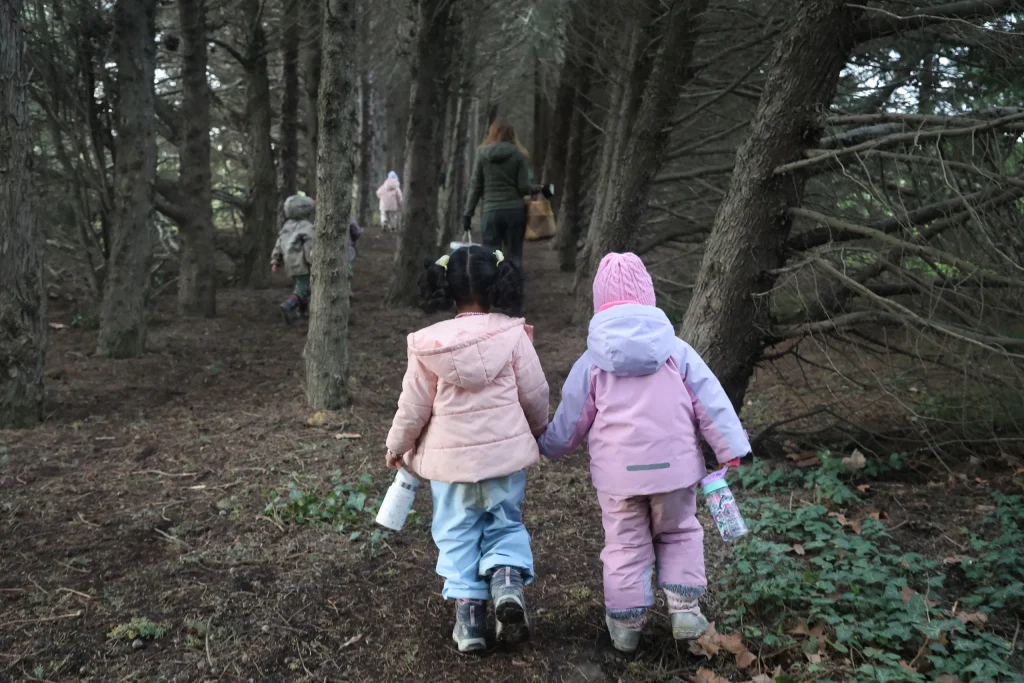
At IICS, we believe that meaningful learning happens everywhere — especially outdoors. Our Forest Learning program invites Early Years and Primary Years students to explore, discover, and connect with nature on a regular basis, right on our spacious green campus.
Forest Learning is a dynamic form of nature-based learning and outdoor learning that allows children to experience the learning of nature firsthand. Rather than sitting inside four walls, students step into a living classroom where trees, soil, insects, and weather become part of their daily inquiry.
Through experiential learning, children climb, build, investigate, collaborate, and reflect. They engage in authentic, hands-on experiences that support not only academic development but also emotional well-being, resilience, and independence. Forest Learning at IICS is not an occasional activity — it is an intentional and meaningful part of our educational philosophy.
Where Does Forest Learning Come From?
Forest Learning at IICS is inspired by internationally respected educational approaches, particularly the Reggio Emilia philosophy and the IB Primary Years Programme (PYP).
The Reggio Emilia approach views children as capable, curious, and competent learners. It emphasizes inquiry, creativity, and the environment as the “third teacher.” In a forest setting, this belief becomes visible: children follow their interests, create their own projects, and use natural materials as tools for exploration and expression.
The IB PYP framework aligns seamlessly with forest education. The PYP encourages inquiry-based, student-centered learning that connects across disciplines. In our forest sessions, children ask questions, observe patterns in weather and seasonal changes, explore ecology learning through real-life examples, and reflect on their discoveries.
By combining natural education with the PYP’s transdisciplinary approach, we ensure that learning through nature supports science, literacy, numeracy, social studies, and the arts. The forest becomes a co-teacher — sparking curiosity, creativity, and critical thinking in authentic ways.
What Does Forest Learning Give Children?
Forest Learning provides far more than academic growth. It offers lifelong skills and deep personal development. Research on nature-based learning benefits shows that children thrive when given time in outdoor environments.
Through regular forest sessions, children develop:
Resilience – Facing natural challenges such as balancing on uneven ground or building shelters strengthens perseverance.
Problem-solving skills – Students work together to design structures, use ropes safely, or cook in the clay oven.
Independence and agency – Children choose activities, move between stations, and initiate their own projects.
Confidence – Taking safe risks in nature builds self-belief.
Collaboration and communication skills – Real-world tasks require teamwork and negotiation.
Physical development – Climbing, balancing, lifting, and moving enhance gross motor skills.
Creativity and imagination – Unstructured play inspires storytelling, music-making, and artistic expression.
Emotional well-being – Time in nature reduces stress and supports positive mental health.
Environmental awareness – Through ecology learning, children grow into global citizens who respect and care for the world around them.
This form of nature education nurtures the whole child — academically, socially, emotionally, and physically.
How Does Forest Learning Work at IICS?
Our Forest Learning sessions take place on our green campus, where students have access to rich outdoor environments. Each session is carefully facilitated by trained educators who guide exploration while allowing space for curiosity.
In the forest, children:
Build shelters using natural materials
Bake bread, pizzas, and cookies in our clay oven
Experiment with music using found objects
Learn rope skills and practice on the slackline
Observe insects, plants, and animal tracks
Explore seasonal changes and weather patterns
Students are free to move between learning stations, follow their interests, and collaborate with peers. Educators observe, document, and extend learning through thoughtful questions and reflections.
This structure allows for both freedom and intentional teaching, blending outdoor learning with curriculum goals in a meaningful way.
How Do Our Teachers Observe the Benefits of Forest Learning?
Our forest educators and classroom teachers consistently observe powerful growth in students who participate in forest sessions.
One of our forest educators, Miss Yeliz, shares that every session reveals students taking ownership of their learning. She witnesses children building, creating, solving problems, and using observation skills to explore the natural world. The agency students experience — the freedom to choose, initiate, and reflect — is transformative.
Classroom teachers also report noticeable differences. Students who may feel hesitant indoors often demonstrate leadership outdoors. Teachers observe improved collaboration skills, increased focus during inquiry projects, and stronger communication abilities.
Academically, children bring their forest experiences back into the classroom. A math lesson might reference measuring wood pieces. A literacy unit may grow from storytelling inspired by a forest adventure. Science discussions are enriched by real-life ecology learning experiences.
Challenges do arise — such as managing risk-taking or adapting to weather conditions — yet these moments become valuable learning opportunities. Teachers guide students in assessing risk responsibly and developing adaptability, which further strengthens resilience.
Forest Learning supports the IB learner profile by nurturing balanced, reflective, and caring individuals.
Why Do Parents Love Forest Learning?
Parents frequently share how Forest Learning positively impacts their children.
One EY3/4 parent expressed how much they value that their child begins the day in the forest with teachers and classmates. They noticed increased independence, improved critical thinking skills, and stronger social development.
Families also appreciate the hands-on experiences. Baking pizzas and cookies in the clay oven, building shelters, and engaging in real-world tasks create lasting memories. One parent described joining a forest session and being amazed at the meaningful outdoor activities taking place.
Parents recognize that this is more than play — it is purposeful nature learning that fosters growth beyond textbooks.
Open the Door to Learning in Nature with IICS!
Forest Learning at IICS allows children to grow roots that support a lifetime of learning. Whether it is a quiet moment under a tree, a muddy exploration after the rain, or collaborative problem-solving around a shelter project, each experience contributes to holistic development.
By integrating nature-based learning, experiential learning, and the IB framework, we offer an educational journey that is both joyful and transformative.
We invite you to discover how the learning of nature can inspire your child’s curiosity, confidence, and connection to the world.
1. Is forest a good school?
Forest Learning is not a separate school but a powerful approach within our curriculum. It enhances traditional learning by providing real-world, hands-on experiences.
2. What can we learn from forests?
Children learn science concepts, ecology learning, teamwork, creativity, and life skills. Forests teach observation, patience, and respect for the environment.
3. Is forest learning part of the school curriculum?
Yes. Forest Learning is integrated into our curriculum and complements classroom learning by supporting inquiry, exploration, and hands-on experiences across different subject areas.
4. How is safety ensured during forest learning sessions?
All sessions are supervised by trained teachers. Activities are carefully planned with appropriate risk assessments, clear safety guidelines, and age-appropriate challenges to ensure a safe and enjoyable learning environment.
5. Is it mandatory for my child to take part in forest learning classes?
Yes. Forest Learning is an important part of the educational experience at IICS, and all students are encouraged to participate unless there is a specific medical or individual need that requires alternative arrangements.
6. How many days a week do forest learning sessions take place?
The frequency varies depending on the age group and curriculum. Students participate in Forest Learning regularly throughout the school year to ensure consistent engagement with outdoor learning.
As a forest educator at IICS, I consider myself incredibly lucky to have access to such an inspiring outdoor space. Our forest provides endless opportunities for meaningful, student-led learning. Every session, I witness our learners take ownership of their experiences; whether they’re building, creating, facing a problem and solving it, or using observation skills to explore the natural world around them.What makes this environment truly special is the agency it offers. Students are allowed to move between stations freely, follow their curiosities, and often create their own projects based on what captures their imagination. As forest educators, we act as facilitators; guiding, supporting, and celebrating each learner’s journey. As part of our PYP approach, forest learning nurtures not just academic growth, but also resilience, collaboration, and emotional well-being. It’s a privilege to see children thrive in a space where they feel safe to take risks, explore freely, and connect deeply with both nature and each other.Each day in the forest reminds me of the power of meaningful experiences and the joy of watching young minds grow in such a rich and inspiring environment.
Ms. Yeliz Ayhan, Early Years Teacher
We believe that IICS’ forest learning is highly beneficial. So what do we do out there? We build shelters, the children make music , we have a clay oven that we cook, we learn how to use a rope in different ways and we have a slackline. We learn to communicate and most importantly we learn how to solve real life problems.
Ms. Zoe Roles, Grade 1 Teacher
We’re really happy that he’s in the program you know every morning he gets to go out into the forest with his teachers and his classmates and he gets to interact with nature there and as a result it’s really fostered his independence and critical thinking skills and improved him socially. We really love that he goes and bakes in the oven in the forest. We went out with him one morning and baked pizzas and cookies and it was just really amazing to do some hands-on activities in the outdoor with him.